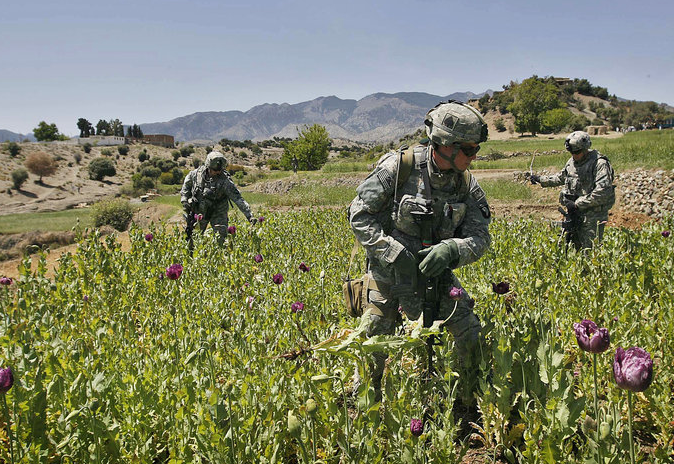
 (Photo: From no captioned needed)
General To NATO: "Give Me A Break" On Afghan Drugs
-- Reuters
-- Reuters
BRUSSELS, Oct 6 (Reuters) - NATO's top operations commander hit out on Monday at allies resisting his call for the alliance to use more aggressive tactics against Afghan drug production.
"We still have a handful of nations...who have not listened to the argument but are countering with questions that have been answered over and over and over again," NATO Supreme Commander for Europe General John Craddock told a seminar in Brussels.
The U.S. general, who has called for tougher action against drug labs and trafficking networks, rejected the idea that his proposal would worsen the Taliban insurgency and stressed it would not involve targeting farmers' crops.
"This is not about eradication. The fear that this will make the Taliban more mad at us? Give me a break!" he said.
"What are these suicide bombs and IEDs, these terrorist attacks, all about? How can it be any worse?"
Craddock quoted U.N. estimates that the trade in drugs was bringing in about $100 million every year to the Taliban and said the trade also fuelled corruption in the Afghan government.
Read more ....
My Comment: A general is talking the truth about the problems of drugs in Afghanistan. It is his political masters who do not want to listen.


2 comments:
More aggressive military tactics will not work. The US government spent well over $3 billion dollars trying to eradicate and disrupt coca production in Colombia and it had virtually no success.
If NATO is truly concerned about the drug money going to the Taliban, it could do any number of things that work far better than getting "more aggressive"
Check out this blog, http://daregeneration.blogspot.com for some real alternatives to the terrorist cash-cow that is Afghanistan's poppy crop.
Matthew Potter makes a good point .... something that I have myself mentioned in previous posts. But I have a slightly different view when it comes to Afghanistan.
The difference is that there are thousands of American troops on the ground, and poppy fields are easy to locate. Cocoa fileds are not easy to find in Colombia, and there are only a few U.S. advisors/soldiers in the country.
But the problems associated with drugs does not reside in the producing countries .... it resides in the nations that consume these drugs. The unfortunate part for Afghanistan, is that it is these revenues that are now helping the Taliban to prolong this war.
Post a Comment