Showing posts with label First World War. Show all posts

Monday, November 11, 2019

Remembering The Fallen From The First World War


WNU Editor: You can download a pdf copy of the poem from here .... In Flanders Fields by John McCrae.

Tuesday, November 13, 2018

How Deadly Was World War I?


Zero Hedge: How Deadly Was World War I?

Veterans Day in the United States was created to commemorate the veterans of World War I. This year Veterans Day also marks 100 years since the end of the war to end all wars.

As Statista's Sarah Feldman notes, World War I became known as the war to end all wars due to how deadly it was to those who went into combat. The advent of mustard gas and chlorine gas along with trench warfare, made the casualties rate much higher than previous conflicts.

Casualties are defined here as soldiers who were killed, wounded and captured or reported missing during combat.

Read more ....

WNU Editor: The term "meat-grinder" best describes the casualty rate for this war. No wonder the Germans capitulated when fresh U.S troops entered the conflict.

Monday, November 12, 2018

Five Innovations to Emerge From the First World War That Changed The Face Of War Forever


Popular Mechanics: Five Innovations to Emerge From the First World War

From hand grenades to fighter planes, World War I changed the face of war.

Veterans Day, observed every year on November 11th, is the anniversary of the Armistice with Germany that ended World War I. This Veterans Day marks the one hundredth anniversary of the end of the Great War, a global conflict that lasted approximately four years and killed more than thirteen million people worldwide.

As a form of competition, war supercharges innovation and often brings new, sometimes terrible, innovations to the forefront. On this anniversary Popular Mechanics asked Doran Cart, senior curator at the National World War I Museum and Memorial at Kansas City, Missouri, to discuss five innovations that emerged from what was dubbed "The War to End All Wars".

Read more ....

WNU Editor: I would add tanks, submarines, and advances in artillery to this list.

Thursday, November 8, 2018

The First And Last British Casualties Of The First World War Rest Just Metres Apart


WNU Editor: Over 17,000,000 soldiers and civilians were killed in the First World War (Wikipedia), of which 1,114,914 were British soldiers.

Monday, July 31, 2017

100 Years Ago The Battle For Passchendaele Began


DW: WWI commemorations of Third Battle of Ypres begin

The Belgian town of Passchendaele is marking the 100th anniversary of the start of one the bloodiest battles of the First World War. The casualties were massive and, quite possibly, unnecessary.

Two days of commemorations of one of the worst battles of the First World War are underway in the 3,000-inhabitant town of Passchendaele and the surrounding area in West Flanders, Belgium. At least 460,000 soldiers died in the Battle of Passchendaele, also known as the Third Battle of Ypres, which lasted from July 31 to December 31, 1917.

The official ceremony opened with the playing of the Last Post, a bugle call in the British Army and other armed forces, at Menin Gate in Ypres. July 31 sees a memorial service in the Tyne Cot Cemetery, the largest graveyard for British Commonwealth forces in the world. Ceremonies are jointly organized by the UK government and local Belgian authorities.

Read more ....


More News On Remembering The Battle For Passchendaele

Passchendaele: Ceremony honours 'bravery' -- BBC
Passchendaele, 100 years on: Remembering the soldiers who ‘died in hell’ -- France 24
Battle of Passchendaele remembered in Ypres, Belgium -- DW
Battle of Passchendaele: Ceremony in Belgium marks 100 years since one of First World War’s deadliest offensives -- The Independent
Prince William remembers the Battle of Passchendaele at the Menin Gate in Ypres -- International Business Times
William hails `sacrifice´ of war dead at centenary of Battle of Passchendaele -- Daily Mail
Passchendaele, 100 years on: a final great act of remembrance -- Daniel Boffey, The Guardian
Passchendaele's untold army of women nurses -- BBC

Tuesday, July 4, 2017

Life As A POW During World War One Was Not That Bad

While the horrors of the First World War are well-known, a new trove of pictures lifts the lid on another side of the conflict - the life of luxury enjoyed by some including British prisoners kept in German POW camps. Here, and officer is pictured in his room which includes a quilted bed, writing desk, and wardrobe to keep his things tidied away

Daily Mail: When being captured was a Great Escape! Photographs reveal how World War One prisoners enjoyed a life of luxury in German POW camp compared to life in the trenches

* Lieutenant Charles Mayo, from London, was captured after being shot in the thigh fighting in Belgium in 1915
* He was taken to an officer's hospital before spending time in two German camps until his release in 1917
* Lt Mayo documented the relaxed life in the camp, including amateur dramatic shows and games of football
* Officers even had an agreement with guards and were allowed to leave - provided they came back at night

From the rat-infested trenches to the constant shelling and threat of poison gas, the horrors troops endured during the First World War are well known.

What is less well-known is the relative life of luxury enjoyed by some away from the front lines, even after being taken prisoner by the enemy.

A fascinating archive of pictures taken by British Lieutenant Charles Mayo documents the very civilised lifestyle inside two German POW camps.

Read more ....

WNU Editor: It was a different time then.

Sunday, April 9, 2017

Canadians Remember The World War One Battle At Vimy Ridge


Toronto Star: Thousands to gather in France for 100th anniversary of Vimy Ridge

Canadian government is hosting the ceremony, paying homage to the sacrifices and achievements of all those who participated in the 1917 battle where over 10,000 Canadians were killed or injured.

Officials, veterans and media from all over the world will gather in France Sunday for the commemoration of the 100th anniversary of the Battle of Vimy Ridge.

Up to 25,000 Canadians are expected at the Canadian National Vimy Memorial, with millions more expected to watch from around the world.

Read more ....

More News On Canadians Remembering The World War One Battle At Vimy Ridge

Vimy 100 Years Later: Complete report -- CBC
Hollande, Trudeau mark centenary of WW1 battle at Vimy Ridge -- Reuters
Canada commemorates WWI Battle of Vimy's 100-year anniversary in France -- DW
Hill 70: Canada's forgotten victory in France finally memorialized -- CTV
The Battle of Vimy Ridge, as it happened -- CBC

Friday, April 7, 2017

100 Years Ago The U.S. Entered The First World War


Politico: United States enters World War I, April 6, 1917

On this day 100 years ago, the United States declared war on Germany, entering the worldwide conflict then known as the Great War. The struggle, which had begun in the summer of 1914, would take a decisive turn against the Central Powers after more than 2 million U.S. troops, under the command of Maj. Gen. John J. Pershing, arrived in France to bolster the Allied effort.

In 1916, Woodrow Wilson, the Democratic president, had sought reelection on the slogan, “He kept us out of war!.” He asserted that a Republican victory would trigger a war with Mexico and Germany. His stance helped him win the Western states.

Read more ....

WNU Editor: Yup .... the Great War changed everything.

Thursday, June 30, 2016

Remembering The Battle Of Somme 100 Years Later


BBC: Battle of the Somme: Queen leads centenary remembrance events

The Queen has led events to mark 100 years since the Battle of the Somme, as overnight vigils got under way on the eve of the anniversary.

Services have been held in Westminster Abbey in London and in Scotland, Wales and Northern Ireland.

At a vigil in France the Duke of Cambridge paid tribute to the fallen soldiers saying "we lost the flower of a generation".

On Friday at 07:28 BST a two-minute silence will mark the battle's start.

It will be followed by events in the UK and near the WW1 battlefields in France.

The Battle of the Somme, one of WW1's bloodiest, was fought in northern France and lasted five months.

The British and French armies fought the Germans in a brutal battle of attrition on a 15-mile front.

In total, there were more than one million dead and wounded on all sides.

Read more ....

Update: Relaxing before the carnage: Heartbreaking photos of our troops on the eve of the Somme 100 years ago shortly before they went 'over the top' on the bloodiest single day in British military history (Daily Mail)

WNU Editor: We have a tradition in our family of lighting a candle every Friday night to remember those we know .... and do not know. Tomorrow our candle will be lit to remember the 1,000,000 who were killed or wounded in this battle.

Wednesday, June 8, 2016

A Hundred Years Ago The Battle Of The Somme In World War I Is Still Regarded The Most Deadly In History

Still image from the film The Battle of the Somme showing a staged attack. Believed to be shot before the opening of the battle on 1 July 1916, possibly at a trench mortar school behind the lines. Wikipedia

Washington Examiner: The Battle of the Somme 100 years on

There should be a special name for books about World War One in which World War One doesn't feature. I mean novels such as Ernest Hemingway's Fiesta, Evelyn Waugh's Vile Bodies and (except for two glancing references) F. Scott Fitzgerald's The Great Gatsby. Novels, in other words, where the trenches are a constant, brooding, unmentioned horror.

I'd add another classic to that list: J.R.R Tolkien's The Lord of the Rings. Although Tolkien used to get cross with anyone who suggested that his books were allegorical, he admitted that "the Dead Marshes and the approaches to the Morannon owe something to Northern France after the Battle of the Somme." Tolkien served as a junior officer in that abomination, whose centenary we mark this week.

"Somme," wrote a Prussian veteran afterwards. "The whole history of the world cannot contain a more ghastly word." The first day remains, by some measure, the worst in the history of the British Army: An almost unbelievable 19,200 men were killed.

Read more ....

WNU Editor: 5 months of fighting .... almost a million killed. No battle in history comes even close to those numbers. On a side note .... it appears that humans have been committing atrocities and war in this part of Europe since the beginning of time .... France unearths bones from 6,000-yr-old Neolithic massacre (AFP).

Sunday, May 29, 2016

Remembering The World War One Battle Of Verdun


BBC: Verdun battle centenary marked by France and Germany

French President Francois Hollande and German Chancellor Angela Merkel are marking the 100th anniversary of the battle of Verdun, the longest of World War One.

Hundreds of thousands of French and German soldiers died during 10 months of fighting in north-eastern France.

France eventually emerged victorious.

But today Verdun is seen as a symbol of Franco-German reconciliation, which was reflected by both Mr Hollande and Mrs Merkel in their speeches.

Read more ....

More News On Remembering The Battle Of Verdun 100 Years Ago

German, French Leaders Mark 100 Years Since Battle of Verdun -- AP
Merkel, Hollande together mark 100 years since Verdun battle -- Reuters
Hollande, Merkel mark centenary of Battle of Verdun -- DW
Germany, France mark 100th anniversary of Battle of Verdun -- CBC
Merkel praises Franco-German cooperation a hundred years after Battle of Verdun -- DW

Monday, September 7, 2015

What 6 WWI Battlefields Look Like 100 Years Later

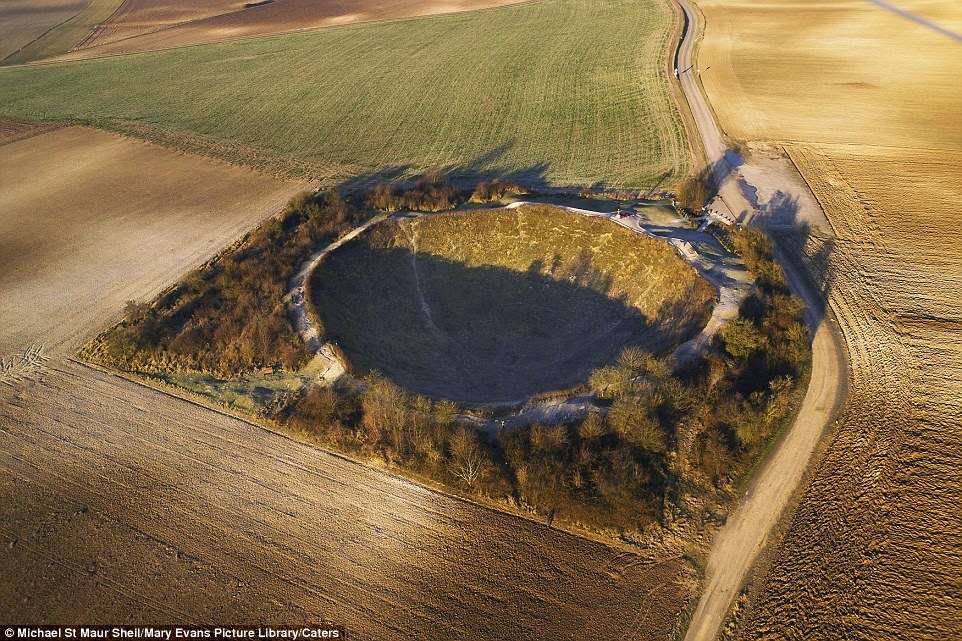
50,000 pounds of explosives were placed in a tunnel under German lines by British soldiers. The explosion created a hole over 90 meters wide.

Vintage History: What 6 WWI Battlefields Look Like 100 Years Later

These places have seen endless destruction and have been ravaged by war. However, what remains is a rich history and visually stunning landscapes.

Saturday, November 8, 2014

A Photo Gallery Of The Beautiful Landscapes Which Were Once The Scene Of Some Of World War One's Bloodiest Fighting

 (Click on Image to Enlarge)
The Lochnagar crater on the 1916 Somme battlefields in France is the largest man-made mine crater created in the First World War on the Western Front. It was created by a mine laid by the British Army's 179th Tunnelling Company Royal Engineers underneath a German strongpoint called.The mine was exploded at the launch of the British offensive against the German lines on July 1, 1916

Still Bearing The Scars Of War, The Beautiful Landscapes Which Were Once The Scene Of Some Of World War One's Bloodiest Fighting -- Daily Mail

* Atmospheric shots were taken by photographer Michael St Maur Sheil who spent seven years on the project
* The collection called Fields of Battle-Lands of Peace 14-18 form an open-air exhibition featuring 60 photographs
* Includes image of Beaumont Hamel on the Somme where Newfoundland Regiment were decimated by Germans
* Also features football which London Irish Rifles kicked over No Mans Land on Christmas 1915 as they attacked Loos

These haunting images reveal the battlefields of World War One as they look today - one hundred years after the fighting broke out.

The powerful and atmospheric shots were taken by photographer, Michael St Maur Sheil, who spent seven years on the project.

The collection, called Fields of Battle-Lands of Peace 14-18, form an open-air exhibition featuring 60 freestanding photographs, each measuring 1.2 metres (4ft) by 1.8 metres (5ft 10in).

Read more ....

WNU Editor: Here is another impressive photo gallery from 100 years back .... How Stonehenge site became the world's largest military training camp (BBC).

Tuesday, August 5, 2014

Britain Remembers The Fallen On The 100th Anniversary Of It's Declaration Of War Against Germany In The First World War

The Houses of Parliament, pictured taking part in a similar scheme in 2007, switched their lights off at 10pm last night as part of an initiative to commemorate Britain entering the First World War

The Night The Lights Went Out Across Britain: Young Royals Bow Their Heads As Millions Take Part In Moving Tributes To The Fallen - Exactly A century Since WWI Was Declared -- Daily Mail

* Idea inspired by former foreign secretary Sir Edward Grey's famous words when war was declared 100 years ago
* Houses of Parliament, Tower Bridge, St Paul's Cathedral and Buckingham Palace all took part in London
* PM David Cameron urged families to join in the 'gesture of remembrance' by leaving on a single light

The London Eye, 10 Downing Street and the Houses of Parliament were among Britain's landmarks which turned out their lights for an hour at 10pm last night to remember those who died in the First World War.

Homes, businesses and public buildings across the UK were asked to leave on a single light or candle to commemorate the moment then-prime minister Herbert Asquith declared Britain had entered the First World War at 11pm on August 4, 1914.

Buildings around the country yesterday took part in the 'hour of reflection' between 10pm and 11pm, leaving just a light illuminating a window.

Read more ....

My Comment: A lot has changed in 100 years. 

Monday, August 4, 2014

The First World War Started 100 Years Ago Today


French, German Presidents Mark World War I Anniversary -- Voice of America

PARIS — French and German presidents evoked the bloody lessons of World War I and hailed the emergence of a largely peaceful Europe Sunday, as they marked the centenary of Germany's declaration of war on France.

French President Francois Hollande and his German counterpart Joachim Gauck met in France's eastern Alsace region to lay the first stone of a memorial for French and German soldiers killed during what is called the Great War. Their meeting took place in Vieil Armand - known in German as Hartmannswillerkopf - where roughly 30,000 soldiers were killed during World War I. Today, memories of those bloody battles linger; one of the mountains is known as "the Eater of Men."

Read more ....

More News On The Start Of The First World War 100 Years Ago Today

Gauck and Hollande commemorate 100th anniversary of World War One -- Deutsche Welle
World War One commemorated in events across UK -- BBC
World War I: How Australia reacted to the outbreak of conflict -- 7 News
When Canada went to war: The story behind our involvement in WWI -- CBC
NZ marks 100 years since World War 1 -- Stuff.co.nz
Russia Marks Day of Remembering Russian Soldiers Killed in World War I -- RIA Novosti
Twilight of the Empire: 10 facts about Russia in WWI -- RT
Vigils to mark First World War centenary -- Irish Examiner
Lights go out to mark World War One centenary -- BBC
Dark shadow of the Great War: Tomorrow marks 100 years since Europe plunged into the war to end all wars. But as this brilliant analysis argues, we are still living with its appalling legacy in Ukraine and Gaza -- Daily Mail
From the Monitor's archives: Germany invades France, declares war on Russia -- Christian Science Monitor
100 years since World War I: Could it happen again today? -- Timothy Noah and Johnny Simon, MSNBC
World War One -- Wikipedia
100 years of World War I: Timeline of The Great War -- IBN Live/AFP

Monday, July 28, 2014

An Inforgraphic On World War One

(Click on Image to Enlarge)

From RIA Novosti: During the First World War, 10 million people were killed, 19 million were wounded and 3.5 million were left permanently disabled. This RIA.ru infographic shows what else WWI wrought in Europe. World War I (1914-1918) was the first global conflict in history, involving 38 countries with a combined population of over 1.5 billion – three quarters of the world’s population at that time. The war lasted four years, three months and ten days, and led to collapse of four empires – Russian, German, Austro-Hungarian and Ottoman. This RIA.ru infographic shows how the war remade the map of Europe and changed life for its inhabitants.

WNU Editor: You will need to click on the above image to enlarge it, but it provides a rather neat summary on the events that led to the start of the First World War .... exactly one hundred years ago today.

The First World War Began Exactly 100 Years Ago

Clockwise from the top: The aftermath of shelling during the Battle of the Somme, Mark V tanks cross the Hindenberg Line, HMS Irresistible sinks after hitting a mine in the Dardanelles, a British Vickers machine gun crew wears gas masks during the Battle of the Somme, Albatros D.III fighters of Jagdstaffel 11

My Comment: Only a hundred years ago? A lot has change since then.

Wikipedia's account of World War One is a good one to read if you have the time.

Saturday, June 28, 2014

World War I Innovations Both Good And Bad (Photo Gallery)

British tanks with trench-crossing equipment, advance with troops in support, during trench warfare in France during the First World War, 1918. Corbis

A Century of World War I Tech: Photos -- Discovery

Saturday marks the 100th anniversary of the assassination of Franz Ferdinand, an event that set off four years of war in Europe.

World War I also saw the introduction of new technologies that changed society. From tanks to machine guns, radio communications to air travel, blood banking to sanitary napkins, the so-called "Great War" was a bridge between the 19th century Industrial Revolution to the 20th century modern era.

Here are a few innovations – good and bad – that first saw light during a conflict that lasted from 1914 to 1918, and left 37 million soldiers and civilians killed or wounded.

Read more ....

My Comment: One can only imagine the innovations that will be developed in the next World War. Yes .... conducting wars on a massive scale is a part of human nature .... and yes .... I hope that I am not around when the next big one happens.

Saturday, April 26, 2014

The Technological Innovations Of WWI

German soldiers and dogs don gas masks in Reims, France during World War I in 1916. Only one year earlier, poison gas was deployed for the first time in war on a mass scale by the Germans in Ypres, Belgium. The battle marked the birth of weapons of mass destruction.

A Revolution In Killing: The Technological Innovations Of WWI -- Felix Bohr, Spiegel Online

A new era in warfare was born on the battlefields of Flanders in 1915. German troops launched a chlorine gas attack in the first ever large-scale use of chemical weapons. It was but one of the technical innovations seen during World War I, and not all of them were as deadly.

The man who would go down in history as the father of chemical warfare acted as his own guinea pig to test his invention. On April 2, 1915, Fritz Haber, the head of Berlin's Kaiser Wilhelm Institute of Physical Chemistry, rode through a yellow-green cloud of chlorine gas on grounds used for troop exercises.

The experiment was successful. The scientist, himself a war enthusiast, began coughing convulsively; he grew pale and had to be carried away on a stretcher.

Read more ....

My Comment
: Tanks and armored vehicles, airplanes, WMDs (chemical weapons) .... World War I certainly did spun an entirely new generation of weapons.

Sunday, June 17, 2012

Remembering The HMS E14

At war: HMS E14 is pictured in 1914 with her crew. She was captained by two officers who each won the Victoria Cross for their heroics on board the submarine

Sunken Treasure: First World War Submarine Whose Two Captains Won The Victoria Cross Is Discovered Off Turkish Coast 94 Years After She Went Down -- Daily Mail

* Government want the site preserved as a war grave
* 25 lives were lost when the vessel was hit by heavy shellfire

The final resting place of a First World War submarine, whose two Royal Navy captains won the Victoria Cross, has been found after 94 years under the sea.

HMS E14 was discovered off the coast of Turkey with the first images of the wreckage showing the sub appears to be largely intact.

Its precise location in the eastern Mediterranean remained a mystery until this month when a Turkish marine engineer and a diver detected it on the seabed off the town of Kumkale - just 800ft from the beach.

Read more
....

My Comment: It makes you wonder if there are more undiscovered undersea wrecks just waiting to be found .... including this fascinating story.