Showing posts with label war and climate change. Show all posts

Thursday, October 6, 2016

President Obama: Climate Change Contributed To Syrian War


Haaretz/AP: Obama: Climate Change Contributed to Syrian War, Is Major Security Threat

During the first ever 'South by South Lawn' event, President Obama discussed the grave consequences of climate change with actor Leonardo DiCaprio.

President Barack Obama liked his March trip to Austin's South by Southwest festival of technology and music so much that he decided to try to re-create the SXSW vibe from Texas on the South Lawn.

On Monday, he rolled out "South by South Lawn," or SXSL, bringing together artists, innovators, musicians and entrepreneurs for the equivalent of a giant White House block party for tech nerds.

The president made a midday visit to the South Lawn to check out booths and vendors promoting everything from virtual reality technology to fake tattoos. He later spoke to the crowd about climate change in a joint appearance with actor Leonardo DiCaprio and climate scientist Dr. Katharine Hayhoe.

Read more ....

WNU Editor: I am sure (and I am willing to bet) that if you ask a hundred Syrians on why there is a civil war in their country .... climate change will not even be on their list.

Sunday, June 29, 2014

Is Man-Made Climate Change Destabilizing Iraq?

One of the most devastating droughts in decades hit Syria and Iraq in 2007-2008. Scientists have linked the drought to climate change. Courtesy of NASA

Hot Zone: Is Climate Change Destabilizing Iraq? -- Eric Holthaus, Slate

This winter was not a good one for farmers in the Fertile Crescent.

A punishing drought hit most of Syria and northern Iraq during what’s normally the wettest time of the year. In the mountains of eastern Turkey, which form the headwaters of the Tigris and Euphrates rivers, snow and rain were less than half of normal. The region has seen one of the worst droughts in decades.

Drought is becoming a fixture in the parched landscape, due to a drying trend of the Mediterranean and Middle East region fueled by global warming. The last major drought in this region (2006-2010) finished only a few years ago. When taken in combination with other complex drivers, increasing temperatures and drying of agricultural land is widely seen as assisting in the destabilization of Syria under the regime of Bashar al-Assad. Before civil war broke out there, farmers abandoned their desiccated fields and flooded the cities with protests. A series of U.N. reports released earlier this year found that global warming is already destabilizing nation states around the world, and Syria has been no exception.

Read more ....

My Comment:  Iraq's problems are far more deeper than not having adequate rainfalls for the past few years. Sighhh ..... this is so typical of the global-warming fanatics in the main stream media trying to push their agenda .... while conveniently ignoring the fact that conflict in this region has been an ongoing affair for centuries (if not longer).

Monday, July 15, 2013

Preparing For Global Unrest Amid Climate Change

Photo from Think Progress

U.S. Military Prepares for Global Unrest Amid Climate Fears (Op-Ed) -- Live Science

Though Earth's shifting climate evokes many images, civil unrest usually isn't one of them. Yet, a warming planet could have a profound impact on national security, both in the United States and abroad. This time, the threat isn't from terrorism or a single enemy, but from natural disasters occurring on an unprecedented scale.

Acts of nature fueled by a warming climate — for example, floods and prolonged drought — may lead to disrupted migration, food and water shortages, and other public health crises — which, in turn, could prompt civil and political instability. Those impacts would pose a particularly profound threat for people in countries with fragile governments, including key U.S. strategic interests.

Read more ....

My Comment: Climate change has always been with us throughout history.... and some wars have been the result. To plan and prevent such conflicts .... I say good luck.

Saturday, October 27, 2012

Will Climate Change Cause Wars?


Will Climate Change Cause Violent Conflict? -- Alex B. Berezow, Real Clear Science

It is widely believed that climate change will lead to violent conflict, for instance, over dwindling water and food supplies. However, a recent paper in PNAS casts some doubt on this.

Using a complicated statistical analysis, researchers analyzed the impact of precipitation and temperature on conflict in east Africa. (See below.)

The above panels measure conflict as a function of precipitation (Panel A) or temperature (Panel B). The dashed line represents long-term average (mean) precipitation or temperature, and the X-axis shows changes in these variables (as reported by standard deviations from the mean). The Y-axis represents conflict.

Read more ....

My Comment: According to their research .... the answer is no. What's my take .... I am not a scientist, but I always in favor of more research in this field.

Wednesday, February 29, 2012

Will A Small Nuclear War Impact Global Climate Patterns?

In 1955 at the governments Nevada test site, a rising fireball dwarfs a crew of atomic cameramen. On the right are rocket plumes, which scientists studied as a way to gauge the progress of shock waves through the atmosphere.

Small Nuclear War Could Reverse Global Warming For Years -- National Geographic

Regional war could spark "unprecedented climate change," experts predict.

Even a regional nuclear war could spark "unprecedented" global cooling and reduce rainfall for years, according to U.S. government computer models.

Widespread famine and disease would likely follow, experts speculate.

During the Cold War a nuclear exchange between superpowers—such as the one feared for years between the United States and the former Soviet Union—was predicted to cause a "nuclear winter."

In that scenario hundreds of nuclear explosions spark huge fires, whose smoke, dust, and ash blot out the sun for weeks amid a backdrop of dangerous radiation levels. Much of humanity eventually dies of starvation and disease.

Read more
....

My Comment: What global warming? I live in Canada and it has been getting colder .... and colder .... and even more colder every year. I guess I am living in the wrong part of the world.

But as to the question .... "will the fires and devastation from a limited nuclear exchange impact world climate systems" .... the answer is "probably". Fortunately the earth is very resilient, and it will bounce back very quickly.

Saturday, October 22, 2011

Will Climate Change Increase Wars And Conflicts?

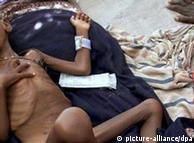
Deaths from malnutrition will likely increase due to climate change

Doctors Partner With Soldiers To Warn Of Climate Conflicts -- Deutsche Welle

Military planners fear climate change could be this century's conflict multiplier and they're starting to talk about it. Together with Britain's medical establishment, they're adding their voices to calls to action.

Soldiers usually pride themselves on leaving politics to the politicians. This week in London they spoke out. Senior European officers urged action on what remains a polarizing issue in the broader community: climate change.

"We've increasingly come to recognize that, as well as the environmental and socio-economic impact of climate change, there is the potential to increase the risk to global stability and national interests," said Neil Morisetti, a Rear Admiral in the Royal Navy.

Read more ....

My Comment: Climate change has been with us since recorded time .... and each instance of profound change in climate resulted in instability and unrest followed by wars and conflicts. But .... can man change climate as many in the global warming community believe that they/we can .... hmmmm ... I have my doubts. Mother nature is too big and too powerful for man to have an impact.

Friday, December 18, 2009

Climate Change Does Not Always Lead to Conflict

From Science Daily:

Science Daily (Dec. 17, 2009) — The climate change that took place in Mesopotamia around 2000 BC did not lead to war, but in fact led to the development of a new shared identity. Although increasing drought often leads to competition and conflict, there seems to be no evidence of this in northern Mesopotamia according to Dutch researcher Arne Wossink.

Wossink studied how the farmers and nomads in northern Mesopotamia -- currently the border area between Turkey, Syria and Iraq -- responded to the changes in climate that took place between 3000 and 1600 BC. He expected to find considerable evidence of competition: as food and water became scarcer the natural result could well be conflict. He discovered, however, that the farmers developed much closer bonds with the semi-nomadic cattle farmers.

Read more
....

My Comment:
This contradicts present studies that future conflicts will arise if climate change continues.

Friday, November 27, 2009

Have The Climate Wars Of Africa Begun?


Kenyans Draw Weapons Over Shrinking Resources -- L.A. Times

Experts fear the conflicts involving cattle, water and land may be just the beginning of climate-driven violence in Africa. At least 400 people have died in northern Kenya this year, the U.N. says.

Reporting from Isiolo, Kenya - Have the climate wars of Africa begun?

Tales of conflict emerging from this remote, arid region of Kenya have disturbing echoes of the lethal building blocks that turned Darfur into a killing ground in western Sudan.

Tribes that lived side by side for decades say they've been pushed to warfare by competition for disappearing water and pasture. The government is accused of exacerbating tensions by taking sides and arming combatants who once used spears and arrows.

The aim, all sides say, is no longer just to steal land or cattle, but to drive the enemy away forever.

Read more ....

My Comment: The short answer is .... yes.

Tuesday, November 24, 2009

Climate Change Could Boost Incidence Of Civil War In Africa

Panic has been spreading through the hills and villages of north of the provincial capital, Goma
Photo:
AFP/GETTY IMAGES

From Science Daily:

Science Daily (Nov. 24, 2009) — Climate change could increase the likelihood of civil war in sub-Saharan Africa by over 50 percent within the next two decades, according to a new study led by a team of researchers at University of California, Berkeley, and published in the Nov. 23 online issue of the journal Proceedings of the National Academy of Sciences (PNAS).

The study, conducted by researchers at UC Berkeley as well as at Stanford University, New York University and Harvard University, provides the first quantitative evidence linking climate change and the risk of civil conflict. It concludes by urging accelerated support by African governments and foreign aid donors for new and/or expanded policies to assist with African adaptation to climate change.

Read more ....

My Comment: These countries in the sub-Saharan region of Africa do not need climate change to continue the slaughter and wars that have engulfed these regions for years .... if not decades.

The problems of Africa has always been ethnic hatreds and tribalism, political corruption, and an environment that makes it next to impossible for free markets and innovation to take hold. It may be convenient for some of these tyrants to blame the weather for them performing dismally in improving the livelihood of their citizens .... and for researchers from Berkeley to back them up .... but the sad truth is that Africa has no one to blame but themselves for the terrible mess that they are in, and getting a handout from the West is not going to solve their problems.

Monday, October 12, 2009

War Games Start to Include Climate Change


From Miller-McCune:

U.S. military and intelligence officials are factoring the symptoms of climate change into their estimates of where and what kind of conflicts are in store.

The Tibetan Plateau is enormous — four times the size of Texas. Both the Yellow and Yangtze rivers issue from it, carrying the glacial runoff from the Himalayas to China. This runoff is a primary source of fresh water for China's 1 billion citizens, 800 million of whom live in poverty.

Experts believe that China's continued economic growth depends on its access to the water that traverses the Tibetan Plateau, a view clearly shared by China's rulers. This helps explain why China holds Tibet in an iron grip. So long as its water is one of China's most precious resources, Tibet has little hope of attaining independence.

Read more ....

Update: Climate Myths and National Security -- American Thinker

My Comment: I have always been a skeptic that global warming is a result of man made factors. The sun has an impact .... yes. Have we had a history of severe climate change .... yes. Is man responsible for this .... looking at history from a global perspective .... I am very skeptical.

But climate change will impact national security .... in fact .... climate change throughout history has always affected national security. The Roman Empire grew during a period of "global warming". The Black Death coincided during a period of severe cold and food shortages. The severe winters in Russia during 1941 - 1943 helped to sap the strength of the German Army.

Yup .... climate change does affect how countries function, and our war games/strategic studies should take this into account (which I am sure that they do).

Friday, February 27, 2009

Mass Migrations And War: Dire Climate Scenario

Icebergs in Vincennes Bay in the Australian Antarctic Territory in January 2008. It seems the dire warnings about future devastation sparked by global warming have not been dire enough, top climate scientists warned Saturday. (AFP/POOL/File/Torsten Blackwood)

From Yahoo News/AP:

CAPE TOWN, South Africa – If we don't deal with climate change decisively, "what we're talking about then is extended world war," the eminent economist said.

His audience Saturday, small and elite, had been stranded here by bad weather and were talking climate. They couldn't do much about the one, but the other was squarely in their hands. And so, Lord Nicholas Stern was telling them, was the potential for mass migrations setting off mass conflict.

"Somehow we have to explain to people just how worrying that is," the British economic thinker said.

Read more ....